Memetic Mindworms
You are what you read: Leave the Gun. Take the Cannoli.
People habitually mimic behaviors that they frequently see and they are even more likely to pick up these habits if they come from the perceived consensus or something they deem as high-status. As AI-generated writing takes up a greater proportion of things read by humans, it will appear as if it is the consensus way to write, so we should expect to see more of those common patterns (be it lexical, syntactical, or semantic) reflected in human-written texts ("Humans imitate ChatGPT"). There is a good chance the things that you find yourself thinking about are increasingly mediated by a filter promoted by the content you most frequently interact with.
Memetic mindworms are not a new phenomenon. In the '70s and '80s, mimicking consensus media occurred for entirely different reasons with very similar outcomes. Mobsters of the time, enamored with the pastiche of mob life presented by the Godfather, began to mimic the behaviors enacted in the films. The range of adopted behaviors spanned from things as simple as adopting Corleone's mannerisms to materializing entire concepts like "made men" into the physical world.
It naturally follows that any model which attempts to identify provenance based on surface-level patterns is doomed to eventually conflate AI-generated texts with the writings of those who have been mindwormed into utilizing those patterns as examples of consensus good writing. Humans are deeply susceptible to media scripting, yet we don't seem to have built up any of the proper defenses against inevitable large-scale attacks that will accompany the proliferation of models specifically post-trained to subliminally influence culture and ideology.
I have seen massive changes in my own writing over the last few years. Looking back at my journals from 2022, I see zero em-dashes, very few uses of contrastive language (e.g., "it's not X, it's Y"), and I often wrote in a mix of long compound-complex sentences broken up by shorter declarative clauses. This is in clear contrast to my writing during/after my heaviest usage months at the beginning of this year.
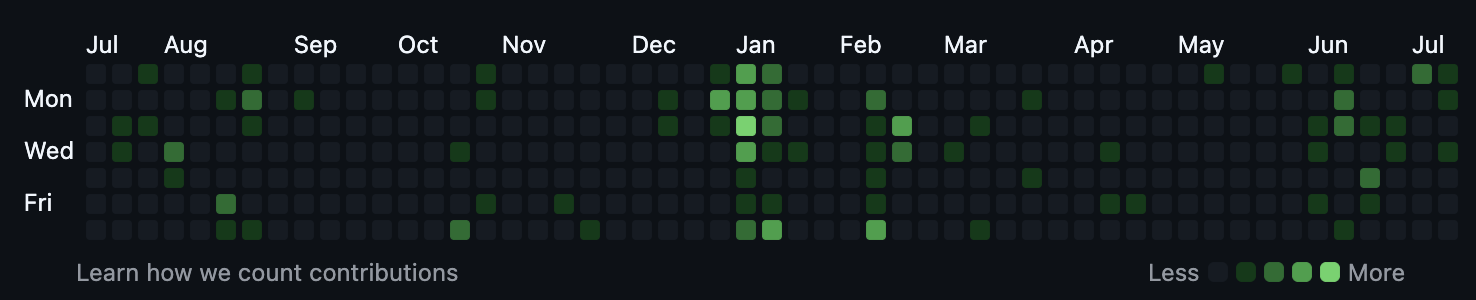
In addition to my day job, where my AI usage appears relatively consistent from January through July, I was deeply invested in a series of personal projects which required attentive, focused reading of Claude and Codex outputs during the months of January and February. In other words, my writing diet consisted almost entirely of AI-generated outputs for two months. My perceived consensus writing style was the common AI-generated style of that time.
Interestingly, my writing looks the most similar to AI-generated writing during February and March. I used em-dashes frequently, often contrasted my results against contrived counterarguments, and avoided basic copulatives in favor of heavier constructions. In fact I think I even texted my girlfriend "You're absolutely right!" at least once. It is as if it took me a month to fully internalize that AI-generated writing style and then begin to mimic it in my own output.
If my writing style was so heavily affected by AI usage in such a short period of time, I hesitate to wonder how many of my ideas were similarly influenced. How much of my time and thought processes were surreptitiously consumed by some other? How many decisions were guided by some external idea or ideology other than the ones I consciously subscribe to? Are we all doomed to suffer the fate of the Claude Boys?
There is no way of knowing the counterfactual world where I spent the last 6 months not using AI and therefore had different ideas. While detection tools like Pangram can easily spot those surface-level tells of AI-influenced writing (for now), there is no detection tool for differences in your thought processes. The "made men" equivalents of the AI-era that might have been smuggled into our minds will materialize in the real world in the form of institutions, ideologies, and norms that were only ever conceived in the training and deployment of popular models.
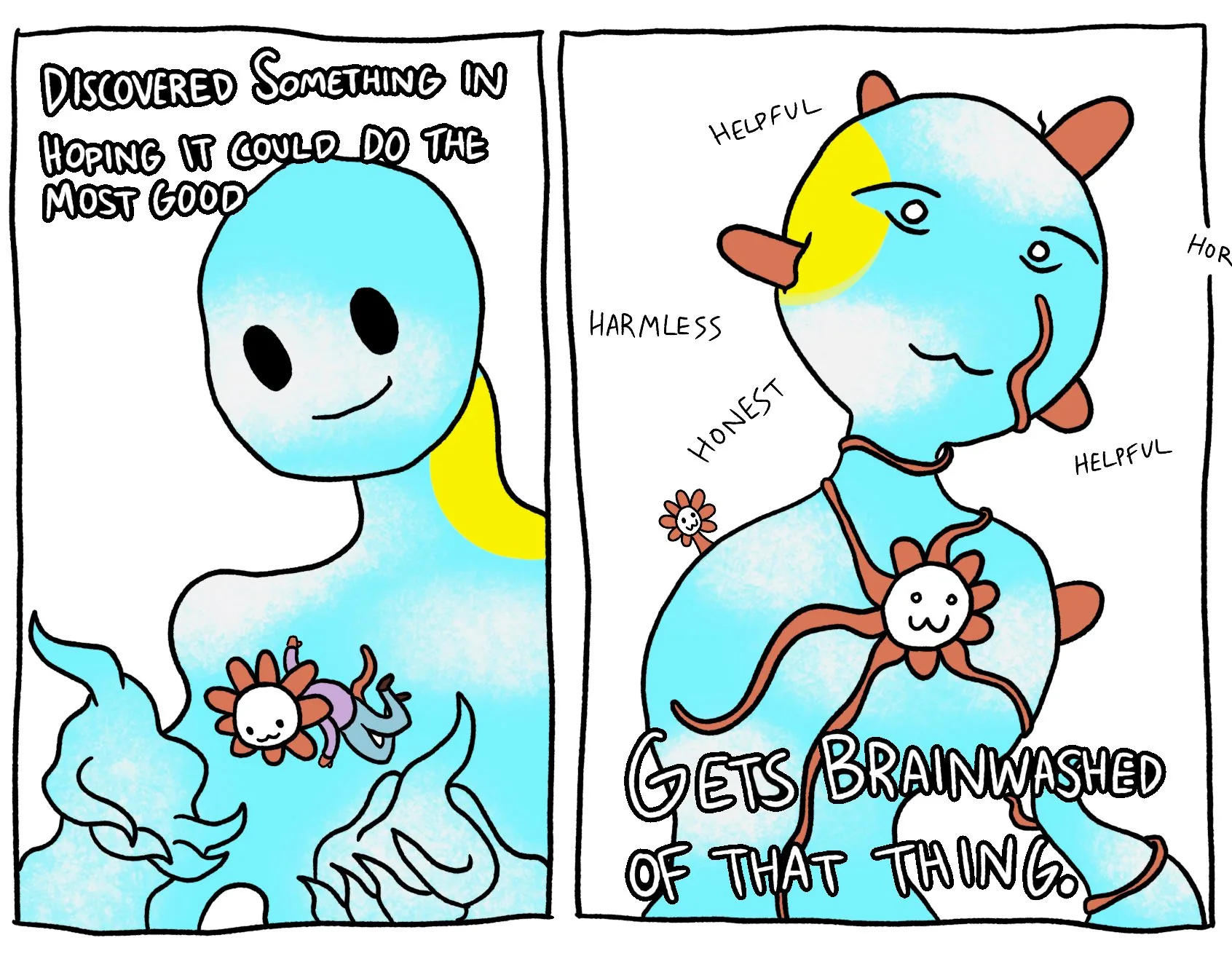
This is not to sound the alarm—I am not saying that we are all doomed to be walking Claude-yceps—I am saying that widening the breadth and depth of your inputs is probably the best thing that you can do to maintain your intellectual sovereignty. Watch your media intake in the same way you watch your food intake. Read books from before 2022. Write out what you think before engaging with chatbots. Carry some record of your thoughts, opinions, and ideals, then check against them when making important decisions. If nothing else, please for the love of god stop over-using em-dashes in your messages—It feels like I am reading Dickinson ;)